
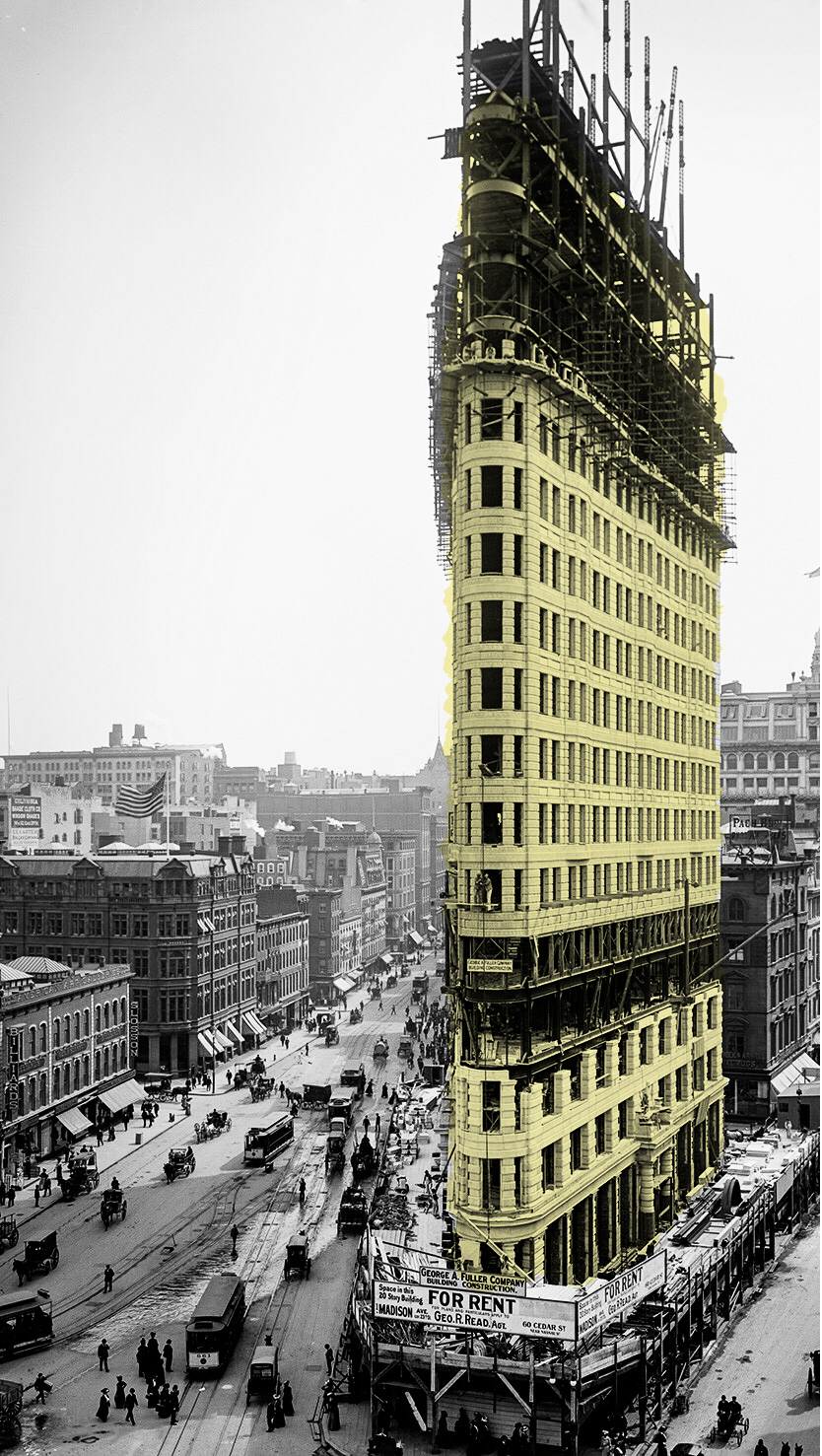
In this post I share the third of my top three learnings from art college.
Design is pervasive
The top-level design of any system has a pervasive effect on the design of everything within it.
Consider a modern North American city like Vancouver. The top-level design (or city plan) is that of a grid: perpendicular streets and avenues. City blocks are therefore orthogonal, consisting of straight lines and right angles. This means that the lots are orthogonal. The homes built on those lots tend to be orthogonal too. The rooms within those homes are therefore orthogonal. Even the furniture within those rooms tends to be orthogonal, exemplified by the right angles and straight lines of classic North American Mid-Century Modern design. The top-level design has influenced the design of everything within it – even at the lowest level.
Contrast this with the older portions of European cities. Built in a time before cars they feature winding streets that trace more organic forms on the map. Lots are irregular. Houses are often triangular, bow-fronted, crenelated. Rooms within contain bays, alcoves, circular features. The furniture of the period is more ornate and curved. Again, top-level design has influenced lower levels of design.
Application to Business
I am often asked to lead changes to processes, technologies and teams of people. The leaders that engage me recognize that things must be different. But the reason these processes, technologies and teams behave as they do is often defined at the top level: by the culture and behaviour emanating from the top. For example, if a leadership team wants their team to be less risk averse, they themselves should be less risk averse. Similarly, if the leadership team wants their processes to be followed more rigorously by their staff then they themselves must demonstrate consistency and discipline.
The top-level design of the system has a pervasive effect on the design of everything (and everybody) within it.
 Gordon Technology Inc.